Skunk Removal
Mike's Wildlife Removal
Skunks are nocturnal mammals known for their distinctive scent defense. While solitary and typically non-aggressive, skunks can create major nuisance issues when they den under porches, decks, sheds, and crawl spaces or visit yards repeatedly due to food attractants. Mike's Wildlife Removal provides specialized skunk removal services in Middlefield and surrounding Connecticut areas, emphasizing safety, humane handling, and odor remediation.
Skunks are common in suburban and semi-rural environments where food and shelter are available. Their burrowing and denning behavior can undermine foundations, damage landscaping, and lead to repeated odor problems that are unpleasant and difficult to eliminate without professional intervention.
Why skunk removal matters
Odor management
Skunk spray is potent, can linger for weeks, and permeate structures, clothing, and pet fur.
Health risk
Skunks are potential rabies carriers. Bites, scratches, or close contact with spray warrants medical attention and public health reporting.
Property damage
Burrowing can destabilize soil near foundations and under decks; repeated denning causes property degradation.
Pet exposure
Curious pets may provoke skunks and suffer sprays or bites.
Key benefits of choosing Mike’s Wildlife Removal for skunks
Nighttime expertise
We operate nocturnally when skunks are active, using careful handling and humane trapping.
Odor remediation
Along with removal, we provide sanitation and odor-neutralizing treatments to restore indoor and outdoor air quality.
Rabies awareness protocols
If an animal exhibits rabies-like behavior, we follow public health reporting protocols and advise on pet and human exposure best practices.
Structural remediation
We repair burrows and address soil and foundation concerns caused by skunk activity.
Understanding skunk behavior
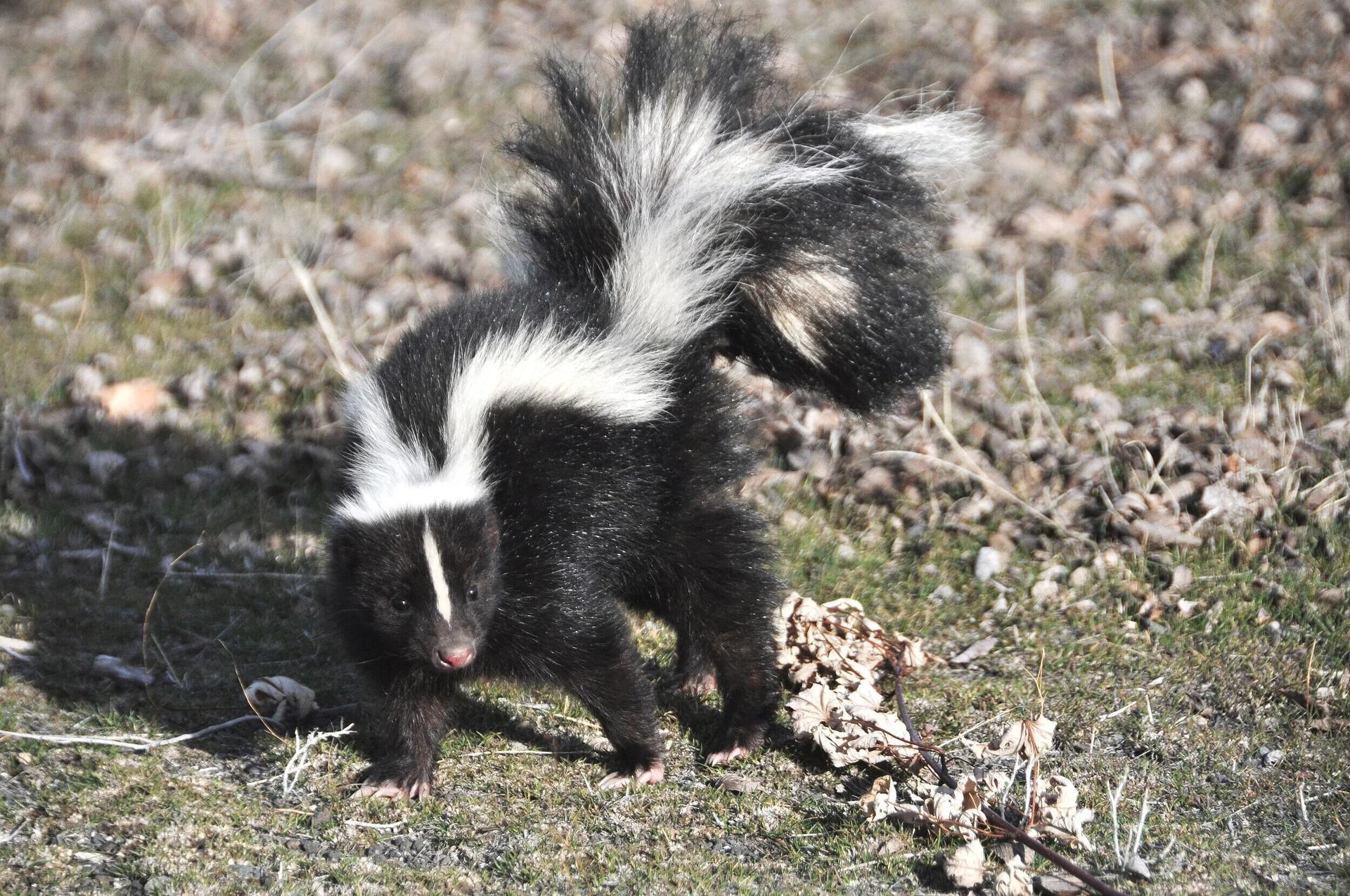
Skunks are attracted to accessible food sources such as pet food left outdoors, unsecured garbage cans, compost piles, and areas where rodents are abundant. They dig for grubs and insects, often creating small shallow holes in lawns, and they expand into larger burrows for denning. Female skunks den with their young in spring; during this period, extra care is needed to avoid separating kits from their mother.
Skunks' primary defense is their spray, not aggression. Humans rarely suffer bites, but accidental encounters do occur, especially when pets approach a den or confront a skunk in the dark.
Our process for skunk removal careful, safe, thorough
Property assessment and identification
We inspect your property at dusk or during the night if needed to confirm skunk presence and locate den sites. Signs include tracks, smear marks, spray odor, burrow holes under decks or sheds, and droppings. We evaluate the risk to pets and people and outline a humane removal plan.
Odor mitigation and sanitation
If a skunk has sprayed near an entry or inside a home, professional odor mitigation is required. We use EPA-approved odor neutralizers and cleaning protocols that break down the sulfur compounds responsible for skunk smell. For sprayed pets, we provide guidance on safe household cleaning measures and recommend veterinary care when appropriate.
Education and attractant reduction
We educate homeowners on reducing attractants: securely latching trash bins, removing fallen fruit, managing compost properly (or keeping bins closed), and feeding pets indoors. We also advise on deterring rodents that can attract skunks.
Humane trapping and exclusion
We use live traps placed in strategic locations and check them frequently. When trapping is necessary, we handle animals carefully to minimize stress and the risk of spraying. For den situations, we gently encourage vacating using non-invasive techniques when safe, or we trap and remove adults in ways that prevent abandonment of healthy offspring. We avoid methods that would cause unnecessary harm or violate local wildlife guidance.
Den repair and prevention
After removal, we repair burrow openings, reinforce vulnerable spaces under decks and sheds, and advise on soil grading to reduce den suitability. We can install hardware cloth or other barriers to prevent future burrowing.
Safety and health protocols
Skunks are considered a rabies vector species. If a skunk displays erratic behavior (daytime activity, inability to walk, or aggression), do not approach the animal and notify us immediately; we will coordinate with local animal control and public health officials. Avoid handling or allowing pets to contact a potentially rabid skunk.
Odor safety considerations for homeowners:
Open windows and ventilate the area as soon as it's safe.
Do not use ammonia-based cleaners on fabrics sprayed by a skunk — this can sometimes exacerbate odor.
Professional fabric and air-treatment often yield the best results for sprayed indoor spaces.
Frequently asked questions (FAQs)
Q: Can skunks spray through walls or under porches?
A: Skunks may spray in covered spaces or from burrows if they feel threatened. Odor can travel through vents and openings. Professional odor mitigation and sealing are effective at preventing lingering smell.
Q: Will trapping a mother skunk separate her from her babies?
A: We take great care to avoid separating a mother from her kits. If we encounter kits, we may delay removal until a safe plan is in place or coordinate with wildlife rehabilitators when necessary.
Q: What should I do if my pet was sprayed?
A: Rinse the pet outdoors using a skunk-deodorizing solution (mixes with hydrogen peroxide and baking soda are popular but follow veterinary advice). Contact your vet for a full evaluation and vaccine update if there was a bite or close contact.
Q: Are skunks protected?
A: Skunks are not generally protected in the same way as some avian or bat species, but humane and legal removal practices should be followed. We adhere to local laws and humane standards.
Q: How do I prevent skunks from returning?
A: Secure garbage, remove food attractants, manage compost, and close off denning opportunities under sheds and decks with hardware cloth or concrete footings.
To address skunk problems quickly and safely, call Mike's Wildlife Removal at (860) 306-1991. Our team will advise on immediate precautions, schedule an inspection, and implement humane removal, odor remediation, and den-proofing to restore comfort and safety to your property. Office: 22 Passiac Road, Middlefield, CT 06455.